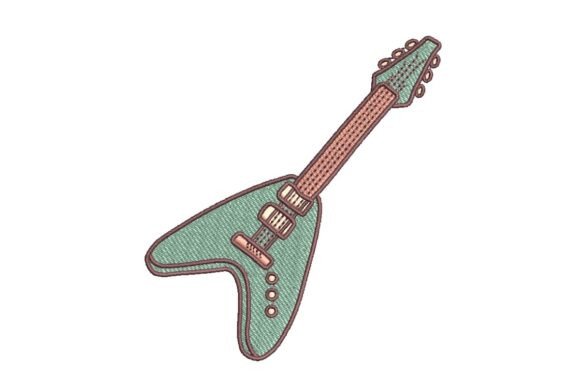
Funky Guitar: A Designer's Review for Business Merch
As a professional embroidery designer who has spent years refining digital embroidery files for small businesses, I know that the difference between a good logo and a great brand asset often comes down to execution. Today, I am reviewing the Funky Guitar design, a piece marketed as a stylish option for music lovers and rock stars. While the product description promises a groovy touch for jackets, my job is to look past the marketing fluff and determine if this machine embroidery design holds up under the scrutiny of commercial production. For boutique owners, Etsy sellers, and apparel decorators, every stitch counts toward your bottom line and brand reputation.
First Impressions: Visual Personality and Brand Fit
When I first load the Funky Guitar into my digitizing software, the visual personality immediately jumps out. It feels playful, bold, and undeniably modern. The lines suggest movement, capturing the essence of a "rock on" attitude without being overly aggressive. For a small business in the creative sector—perhaps a local coffee shop with a live music night, a vintage clothing boutique, or a handmade instrument repair studio—this design offers a distinct advantage over generic floral or text-only logos. It signals energy and approachability.
However, the term "funky" can be a double-edged sword in branding. If your brand identity relies on strict corporate minimalism, this might feel too whimsical. But for businesses aiming to build a community around shared passions, such as Music festivals, youth-oriented brands, or artisanal crafters, the Funky Guitar acts as a perfect conversation starter. It transforms a standard garment into a statement piece, instantly elevating the perceived value of your small business merch.
Evaluating Real-World Business Applications
The true test of any embroidery file is its versatility across different products. Let's break down how the Funky Guitar performs when applied to specific business scenarios.
Patches and Uniform Accents
One of the most effective ways to use this design is as an embroidered patch. Patches allow you to create a cohesive look for staff uniforms without the high cost of custom embroidery on every single shirt. Imagine a team at a record store or a creative agency wearing denim jackets with the Funky Guitar stitched on the back or sleeve. It creates a sense of unity while allowing individual expression. The design's bold outlines make it suitable for patches, provided the backing fabric is sturdy enough to support the stitching weight.
Apparel and Accessories
For custom apparel, the design shines on tote bags and caps. A tote bag design featuring the Funky Guitar serves as a walking billboard for your brand. Customers carrying your branded bag at a farmers market or a local event are effectively advertising your business for free. Similarly, cap embroidery using this motif works well for event giveaways or staff headwear. The curved nature of a cap front requires careful placement, but the guitar shape naturally adapts to the curve if sized correctly.
Aprons and Service Wear
In the food and beverage industry, apron embroidery is a staple. A bakery or café with a musical theme could place the Funky Guitar on the chest pocket or bib area. This adds a layer of character to the uniform, making the staff appear more personable. However, because aprons endure frequent washing and heavy wear, the durability of the stitch work becomes paramount. The design must be robust enough to withstand industrial laundering without fraying or losing definition.
Product Packaging and Labels
Beyond clothing, this design can enhance handmade product presentation. Attaching a small embroidered label with the Funky Guitar to a leather journal, a set of drumsticks, or even a gift box adds a premium, tactile element that printed tags cannot match. This attention to detail reinforces customer trust and suggests that the brand cares about quality in every aspect of the customer experience.
Critical Considerations for Production
While the aesthetic appeal is strong, there are specific areas where the Funky Guitar requires careful handling to ensure a professional finished product.
Stitch Density and Fabric Texture
High-quality digital designs often feature intricate details. If the Funky Guitar includes fine lines or complex shading, the stitch density could become an issue on textured fabrics like fleece, corduroy, or thick canvas. On these materials, dense stitching can cause puckering, distorting the image and ruining the fit of the garment. Always test the design on a scrap piece of the actual fabric before committing to a full run. You may need to adjust the density settings in your machine to prevent the fabric from warping.
Sizing and Placement
Scaling is critical. While the design looks great large on a jacket, shrinking it down for a cap embroidery application or a small patch can result in lost detail. Tiny lettering or thin guitar strings might blur together if the hoop size is too small. I recommend keeping the minimum width above two inches to maintain clarity. Additionally, avoid placing the design on highly curved surfaces without proper stabilizer support, as this can lead to thread breaks and misalignment.
Color Contrast and Thread Selection
The impact of the Funky Guitar relies heavily on thread colors. On dark uniforms, light-colored threads will pop, but you must ensure the contrast is sufficient for readability. Conversely, on light fabrics, darker threads provide definition. Before finalizing a color palette, create a printable mockup to visualize how the colors interact with the background fabric. This step is essential for client approval and prevents costly re-stitching jobs.
Practical Designer Notes for Success
To maximize the potential of this commercial embroidery project, follow these practical steps:
- Test in Black and White First: Run a test stitch in a single color to check the flow of the design and identify any tension issues before adding expensive colored threads.
- Verify Hoop Size: Confirm that your embroidery machine's hoop can accommodate the dimensions of the Funky Guitar without cropping the edges.
- Use Proper Stabilizer: Invest in a high-quality cutaway or tear-away stabilizer suited for the fabric type. This ensures the stitches lay flat and the design remains durable after washing.
- Check Licensing: Ensure you have the correct commercial licensing before using this design for resale items. Using a design intended for personal use on merchandise can lead to legal complications.
- Create Mockups: Always present a realistic mockup to your client or team to confirm the scale and placement before starting production.
Impact on Brand Identity and Customer Engagement
Ultimately, the decision to use the Funky Guitar goes beyond aesthetics; it is a strategic move for your brand identity. A well-executed embroidered design communicates professionalism and attention to detail. When customers see a high-quality embroidered patch or a crisp cap embroidery on your merchandise, they associate that quality with your entire business.
This design encourages buyer engagement by appealing to a specific niche. It tells a story about your brand's values—creativity, passion, and a love for the arts. Whether used for event merch, staff uniforms, or exclusive design assets for loyal customers, the Funky Guitar has the potential to become a recognizable symbol of your brand. By carefully managing the technical aspects of production and aligning the design with your business goals, you can turn a simple graphic into a powerful tool for growth and recognition in the competitive world of small business.